

Posted in: business productivity · cost efficiency · education technology · office equipment
Posted by: Michael Schick on January 5, 2026 at 11:00 am
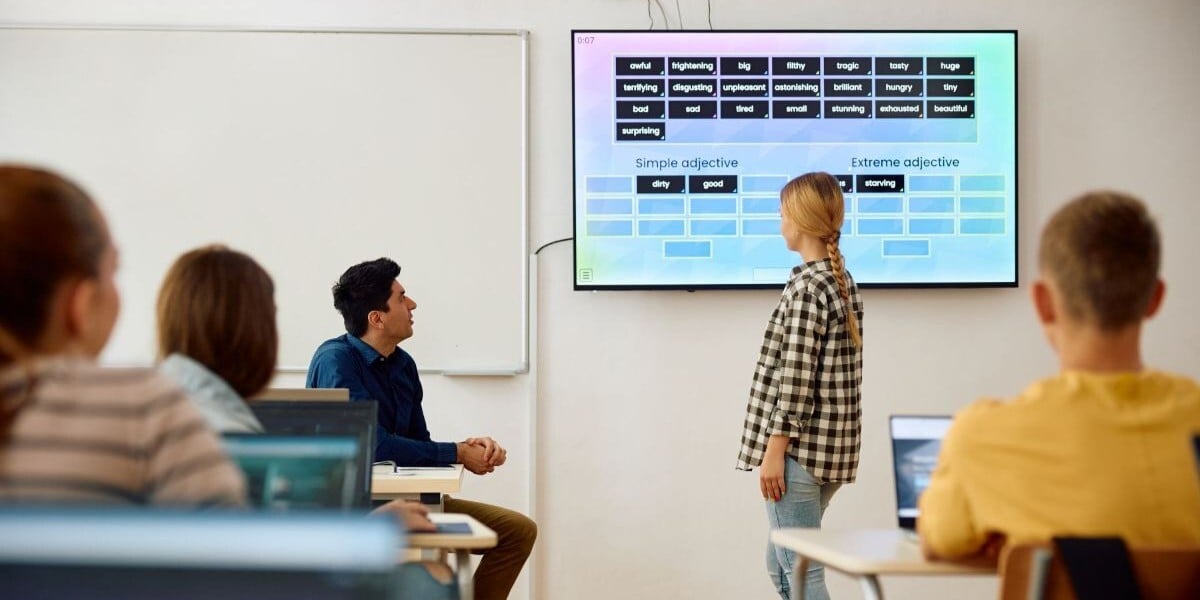
Classrooms today look different than they did a decade ago. Technology plays a central role in how students learn, how teachers deliver lessons, and how schools prepare learners for a digital world. One tool gaining widespread adoption is the interactive whiteboard—a display that allows teachers and students to engage with lessons through touch, digital ink, apps, and real-time collaboration.
As more schools explore ways to support interactive learning, many educators are asking the same question: Do interactive whiteboards for classrooms actually improve learning?
This guide explores how these tools work, the benefits they offer, and how they compare to traditional teaching methods, helping school leaders make informed decisions about investing in modern classroom technology.
What Is an Interactive Whiteboard?
An interactive whiteboard, sometimes referred to as a smart board interactive whiteboard, is a touchscreen display that connects to a computer or device. Teachers and students can write, tap, drag, draw, and interact with digital content directly on the screen.
These systems support multimedia lessons, virtual demonstrations, interactive apps, and collaborative activities that enhance both teaching and learning. The term what is a smart board is often used interchangeably—both refer to technology that blends a digital display with interactive capabilities.
Schools that integrate these tools often pair them with reliable network infrastructure and managed technology support. Solutions such as Managed IT Services help ensure devices stay connected, updated, and secure.
Benefits of Interactive Whiteboards in Education
Interactive whiteboards bring energy, engagement, and flexibility to the learning environment. They help teachers create more dynamic lessons while giving students opportunities to participate in ways traditional tools can’t support.
Student engagement
Interactive content encourages students to get involved. Visuals, animations, and hands-on activities make lessons more compelling, especially for young learners or students who benefit from multisensory instruction. When students can manipulate digital objects or annotate directly on a display, they are more likely to stay focused and retain information.
Teacher productivity
Teachers can save time by importing digital lesson plans, using interactive templates, or pulling in multimedia resources instantly. Many boards also integrate with cloud platforms, allowing teachers to save notes, share digital handouts, or revisit previous lessons without rewriting material.
Schools that support instructors with modern technology often reinforce these tools through broader infrastructure planning. For example, pairing interactive whiteboards with Document Management Solutions can help teachers store and access teaching materials more efficiently.
Classroom case studies
In classrooms where interactive whiteboards have been adopted, educators report improvements such as:
- Higher participation from students who rarely speak up
- Increased collaboration during group activities
- Better comprehension of complex topics through visual modeling
- More efficient transitions between subjects or materials
While results vary across districts, one consistent trend stands out: interactive lessons often lead to stronger engagement and more meaningful learning experiences.
How Whiteboards Support Collaboration
Collaboration is one of the strongest benefits of interactive whiteboards for classrooms. Students can work together on shared digital canvases, annotate documents as a group, or solve problems in real time.
These tools support everything from small-group brainstorming to full-class demonstrations. Students can contribute ideas, share screens, and explore apps that support teamwork and communication skills.
When paired with secure and reliable IT infrastructure, interactive whiteboards become part of a broader digital learning ecosystem. Services like Managed Print and Technology Support help ensure these tools operate smoothly every day.
Comparing Whiteboards to Traditional Tools
Traditional whiteboards, chalkboards, and paper-based activities still have value, but they don’t provide the same level of flexibility or interactivity. Interactive displays offer advantages such as:
- Access to multimedia content
- Real-time collaboration
- Built-in lesson tools and templates
- Digital archiving of notes and materials
- Accessibility features that support diverse learners
Unlike standard boards that can only display static information, digital whiteboards adapt to each lesson, making it easier for instructors to personalize learning.
Are Interactive Whiteboards Worth the Investment?
For most schools, the long-term value comes from improved engagement, enhanced collaboration, and increased teacher efficiency. When supported by proper training and strong IT management, these tools help create a modern, future-ready classroom environment.
Schools considering an investment should evaluate:
- IT infrastructure readiness
- Ongoing support needs
- Classroom goals and curriculum integration
- Device scalability and compatibility
A partner like ISBS can help education leaders assess these factors and identify the right solutions. From device planning to technology support services, ISBS helps schools design environments where instructional technology works seamlessly.
Bring Interactive Technology to Your Classrooms
Interactive whiteboards can transform learning by making lessons more engaging, collaborative, and adaptable. With the right tools and support in place, educators can elevate instruction and provide students with more meaningful learning experiences.
To explore technology options for your school or district, connect with the experts at ISBS. We help organizations implement secure, integrated systems that enhance teaching and simplify day-to-day operations.
Visit the ISBS Technologies page to learn more about the solutions that support collaborative learning environments.